Cooperative Workplace Dispute Resolution Organizational Structure, Ownership, And Ideology
Elizabeth A. Hoffmann
Resumo
Ver tudo
Cooperative Workplace Dispute Resolution Organizational Structure, Ownership, And Ideology
Understanding the complex dynamics involved in workplace disputes helps improve the way organizations deal with unwelcome but inevitable occurrences. These issues have been researched from different perspectives, but previously such research has failed to ask how flattened organizational form might impact ways of resolving disputes, focusing instead on what occurs in conventional, hierarchical organizations only. In Co-operative...
Understanding the complex dynamics involved in workplace disputes helps improve the way organizations deal with unwelcome but inevitable occurrences. These issues have been researched from different perspectives, but previously such research has failed to ask how flattened organizational form might impact ways of resolving disputes, focusing instead on what occurs in conventional, hierarchical organizations only. In Co-operative...

Cooperative Workplace Dispute Resolution Organizational...
Resumo
Cooperative Workplace Dispute Resolution Organizational Structure, Ownership, And Ideology
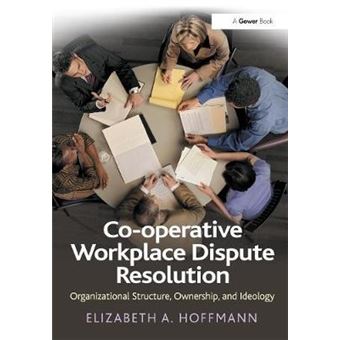
Understanding the complex dynamics involved in workplace disputes helps improve the way organizations deal with unwelcome but inevitable occurrences. These issues have been researched from different perspectives, but previously such research has failed to ask how flattened organizational form might impact ways of resolving disputes, focusing instead on what occurs in conventional, hierarchical organizations only. In Co-operative Workplace Dispute Resolution, Elizabeth Hoffmann considers the question of how workplace disputes are raised in the absence of formal hierarchy. In contrast to conventionally organized businesses, co-operatives attempt to evenly distribute power and ownership and encourage worker control through egalitarian ideologies, flattened management structures and greater information sharing. Like conventional businesses, though, they still pursue goals relating to profit and efficiency. Dr Hoffmann argues that lessening hierarchy and sharing power, as occurs in co-operatives, provides insight into how greater worker involvement and ownership might operate in a less extreme and more modest form in conventional mainstream business. This book focuses on dispute resolution strategies at matched pairs of worker co-operatives and conventional businesses in three very different industries: coal mining, taxicab driving, and wholefood distribution. The authorâs central finding is that the worker co-operative members have access to more dispute resolution strategies than their conventionally employed counterparts. This leads to the conclusion that benefits might be achieved by conventional businesses that wish to embrace specific attributes usually associated with co-operatives, including management-employee cooperation, shared ownership, or greater workplace equality.
Nº de Páginas: 212
Encadernação: Capa Mole / Paperback
Tema: Occupational & industrial psychology
Understanding the complex dynamics involved in workplace disputes helps improve the way organizations deal with unwelcome but inevitable occurrences. These issues have been researched from different perspectives, but previously such research has failed to ask how flattened organizational form might impact ways of resolving disputes, focusing instead on what occurs in conventional, hierarchical organizations only. In Co-operative Workplace Dispute Resolution, Elizabeth Hoffmann considers the question of how workplace disputes are raised in the absence of formal hierarchy. In contrast to conventionally organized businesses, co-operatives attempt to evenly distribute power and ownership and encourage worker control through egalitarian ideologies, flattened management structures and greater information sharing. Like conventional businesses, though, they still pursue goals relating to profit and efficiency. Dr Hoffmann argues that lessening hierarchy and sharing power, as occurs in co-operatives, provides insight into how greater worker involvement and ownership might operate in a less extreme and more modest form in conventional mainstream business. This book focuses on dispute resolution strategies at matched pairs of worker co-operatives and conventional businesses in three very different industries: coal mining, taxicab driving, and wholefood distribution. The authorâs central finding is that the worker co-operative members have access to more dispute resolution strategies than their conventionally employed counterparts. This leads to the conclusion that benefits might be achieved by conventional businesses that wish to embrace specific attributes usually associated with co-operatives, including management-employee cooperation, shared ownership, or greater workplace equality.
Nº de Páginas: 212
Encadernação: Capa Mole / Paperback
Tema: Occupational & industrial psychology
Publicidade
Avaliações dos nossos clientes
Cooperative Workplace Dispute Resolution Organizational Structure, Ownership, And Ideology
Sê o primeiro a dar
a tua opinião sobre este produto
Características
- Editora
-
Taylor & Francis
- Idiomas
-
Inglês
- Número de páginas
-
212,0
- Peso
-
399,16
- Colecção
-
Personnel & human resources management
- Data de lançamento
-
16/11/2016
- Série/Edição Limitada
-
1
- EAN
-
9781138268739
Publicidade
Publicidade