Intelligent Media Agents Key Technology For Interactive Television, Multimedia And Internet Applications Xmultimediaengineering
Hartmut Wittig
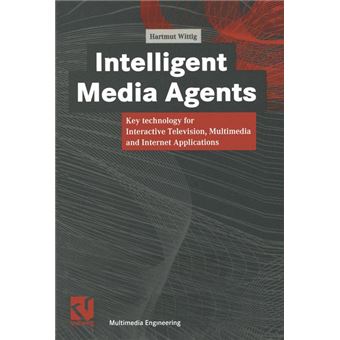
Estado :
Segunda-mão: Bom estado
Estados : Segunda-mão: Bom estado
Capa, contra-capa, cantos e páginas interiores podem apresentar vestígios de utilização.
Vendido por
País de expedição : França
Comentários do vendedor
Antigo livro de biblioteca. Edição 1999. Ammareal doa até 15% do valor líquido deste artigo para instituições de caridade.
Resumo
Ver tudo
Intelligent Media Agents Key Technology For Interactive Television, Multimedia And Internet Applications Xmultimediaengineering
1 Introduction.- 1.1 Research in Interactive Television Systems.- 1.2 Applications.- 1.2.1 Television and Interactive Television.- 1.2.2 Value-Added Services.- 1.3 The Problem of an Information Glut.- 1.3.1 Motivation for TV Program Selection.- 1.3.2 Program Search in Television Systems.- 1.4 Need for Agent-based Systems.- 1.5 Overview.- 2 Towards Personal Television Systems.- 2.1 Software Agent...
1 Introduction.- 1.1 Research in Interactive Television Systems.- 1.2 Applications.- 1.2.1 Television and Interactive Television.- 1.2.2 Value-Added Services.- 1.3 The Problem of an Information Glut.- 1.3.1 Motivation for TV Program Selection.- 1.3.2 Program Search in Television Systems.- 1.4 Need for Agent-based Systems.- 1.5 Overview.- 2 Towards Personal Television Systems.- 2.1 Software Agent...

Intelligent Media Agents Key Technology For Interactive...
Resumo
Intelligent Media Agents Key Technology For Interactive Television, Multimedia And Internet Applications Xmultimediaengineering
1 Introduction.- 1.1 Research in Interactive Television Systems.- 1.2 Applications.- 1.2.1 Television and Interactive Television.- 1.2.2 Value-Added Services.- 1.3 The Problem of an Information Glut.- 1.3.1 Motivation for TV Program Selection.- 1.3.2 Program Search in Television Systems.- 1.4 Need for Agent-based Systems.- 1.5 Overview.- 2 Towards Personal Television Systems.- 2.1 Software Agent Definition.- 2.1.1 Agency.- 2.1.2 Intelligence.- 2.1.3 Mobility.- 2.2 Related Work.- 2.3 Practical Issues and Examples.- 2.3.1 Adoption of User Interfaces/Dialogs.- 2.3.2 Shopping and Other Interactive Services Support.- 2.3.3 Software Agents for Information Retrieval.- 2.3.4 Personal EPG and Movie Generation.- 2.4 Intelligent Agent Research Applied to Television.- 2.4.1 Movie Select.- 2.4.2 Movie Recommendation System (MORSE).- 2.4.3 Siemens Personal Newspaper.- 2.4.4 Evaluation.- 3 Requirements.- 3.1 Requirements to Multimedia Environments.- 3.1.1 Customizing.- 3.1.2 Portability.- 3.1.3 Modifiability.- 3.1.4 Multiple Application Support.- 3.1.5 Distributed vs. Local Processing.- 3.2 Requirements to Program Provision.- 3.2.1 Program Providers.- 3.2.2 Program Description.- 3.2.3 Fuzzy Specification.- 3.3 Requirements to User-Specific Functions.- 3.3.1 Specification of User Demands.- 3.3.2 Processing and Output.- 3.3.3 Privacy and Security Issues.- 3.4 Conclusion.- 4 Agent Run-Time Environment.- 4.1 System Standards.- 4.1.1 DAVIC.- 4.1.2 DVB.- 4.1.3 Multimedia Standards in DAVIC and DVB Compared.- 4.2 Multimedia Standards.- 4.2.1 Multimedia and Hypermedia Experts Group Standard.- 4.2.2 HTML and JAVA.- 4.3 Dynamic Generation of Multimedia Applications.- 4.3.1 Virtual Object Store.- 4.3.2 Location of VOS.- 4.3.3 Comparison.- 5 Architecture of the Intelligent Media Agent.- 5.1 Multilayered Agent Approach.- 5.2 Module Description.- 5.2.1 Multimedia User Interface.- 5.2.2 Basic Agent Operating System.- 5.2.3 High-level Softbots.- 5.2.4 Communication Environment.- 5.2.5 Architecture.- 5.3 Discussion of Privacy and Security Aspects.- 6 Program Descriptors and User Profiles.- 6.1 Classification Units.- 6.2 Program Descriptors.- 6.2.1 Statistics.- 6.2.2 Genre.- 6.3 User Profile.- 6.3.1 Identification and Privacy Aspects.- 6.3.2 Desires and Demands.- 6.3.3 Time of Day, Day of Week, Holiday.- 6.3.4 Fuzzy Attributes.- 6.4 Attribute Types.- 7 Matching and Clustering.- 7.1 Matching Methods.- 7.1.1 Defmition.- 7.1.2 Arithmetical Difference Method.- 7.1.3 Fuzzy Set Matching Method.- 7.2 Application to Attribute Types.- 7.2.1 Percent Attribute Type (PAT).- 7.2.2 Number Attribute Type (NAT).- 7.2.3 Discrete Attribute Type (DAT).- 7.2.4 Hierarchy Attribute Type (HAT).- 7.2.5 Multi-Attribute Types (MAT).- 7.3 Matching Example.- 7.4 Clustering.- 8 Profile Initialization and Update.- 8.1 User Profiles Initialization.- 8.1.1 Explicit Profile Specification.- 8.1.2 Specification by Individual User Properties.- 8.1.3 Specification by Representative Program Examples.- 8.1.4 Initialization by Observation.- 8.1.5 Comparison.- 8.1.6 Conclusion.- 8.2 User Profile Reference Table.- 8.2.1 Defmition of User Properties and Attributes.- 8.2.2 Definition of Initial User Profile Attributes.- 8.2.3 Results.- 8.2.4 Exceptions.- 8.2.5 Further Improvements.- 8.3 User Profile Updates.- 8.4 User Groups.- 9 Decision Support System.- 9.1 Characteristic Properties.- 9.1.1 Visitors.- 9.1.2 Program Changes.- 9.1.3 Periodic Events.- 9.1.4 Zapping.- 9.1.5 Sleeping.- 9.2 User Behavior Variables.- 9.3 Reaction to Zapping.- 10 Implementation and Testing.- 10.1 Implementation based on the MHEG Standard.- 10.1.1 User Interface Agent and Presentation Objects.- 10.1.2 MHEG Engine.- 10.1.3 Multimedia Store.- 10.1.4 Management Components.- 10.2 Implementation of the Electronic Program Guide Application.- 10.2.1 MHEG Prototype Implementation.- 10.2.2 HTML/JAVA Prototy
1 Introduction.- 1.1 Research in Interactive Television Systems.- 1.2 Applications.- 1.2.1 Television and Interactive Television.- 1.2.2 Value-Added Services.- 1.3 The Problem of an Information Glut.- 1.3.1 Motivation for TV Program Selection.- 1.3.2 Program Search in Television Systems.- 1.4 Need for Agent-based Systems.- 1.5 Overview.- 2 Towards Personal Television Systems.- 2.1 Software Agent Definition.- 2.1.1 Agency.- 2.1.2 Intelligence.- 2.1.3 Mobility.- 2.2 Related Work.- 2.3 Practical Issues and Examples.- 2.3.1 Adoption of User Interfaces/Dialogs.- 2.3.2 Shopping and Other Interactive Services Support.- 2.3.3 Software Agents for Information Retrieval.- 2.3.4 Personal EPG and Movie Generation.- 2.4 Intelligent Agent Research Applied to Television.- 2.4.1 Movie Select.- 2.4.2 Movie Recommendation System (MORSE).- 2.4.3 Siemens Personal Newspaper.- 2.4.4 Evaluation.- 3 Requirements.- 3.1 Requirements to Multimedia Environments.- 3.1.1 Customizing.- 3.1.2 Portability.- 3.1.3 Modifiability.- 3.1.4 Multiple Application Support.- 3.1.5 Distributed vs. Local Processing.- 3.2 Requirements to Program Provision.- 3.2.1 Program Providers.- 3.2.2 Program Description.- 3.2.3 Fuzzy Specification.- 3.3 Requirements to User-Specific Functions.- 3.3.1 Specification of User Demands.- 3.3.2 Processing and Output.- 3.3.3 Privacy and Security Issues.- 3.4 Conclusion.- 4 Agent Run-Time Environment.- 4.1 System Standards.- 4.1.1 DAVIC.- 4.1.2 DVB.- 4.1.3 Multimedia Standards in DAVIC and DVB Compared.- 4.2 Multimedia Standards.- 4.2.1 Multimedia and Hypermedia Experts Group Standard.- 4.2.2 HTML and JAVA.- 4.3 Dynamic Generation of Multimedia Applications.- 4.3.1 Virtual Object Store.- 4.3.2 Location of VOS.- 4.3.3 Comparison.- 5 Architecture of the Intelligent Media Agent.- 5.1 Multilayered Agent Approach.- 5.2 Module Description.- 5.2.1 Multimedia User Interface.- 5.2.2 Basic Agent Operating System.- 5.2.3 High-level Softbots.- 5.2.4 Communication Environment.- 5.2.5 Architecture.- 5.3 Discussion of Privacy and Security Aspects.- 6 Program Descriptors and User Profiles.- 6.1 Classification Units.- 6.2 Program Descriptors.- 6.2.1 Statistics.- 6.2.2 Genre.- 6.3 User Profile.- 6.3.1 Identification and Privacy Aspects.- 6.3.2 Desires and Demands.- 6.3.3 Time of Day, Day of Week, Holiday.- 6.3.4 Fuzzy Attributes.- 6.4 Attribute Types.- 7 Matching and Clustering.- 7.1 Matching Methods.- 7.1.1 Defmition.- 7.1.2 Arithmetical Difference Method.- 7.1.3 Fuzzy Set Matching Method.- 7.2 Application to Attribute Types.- 7.2.1 Percent Attribute Type (PAT).- 7.2.2 Number Attribute Type (NAT).- 7.2.3 Discrete Attribute Type (DAT).- 7.2.4 Hierarchy Attribute Type (HAT).- 7.2.5 Multi-Attribute Types (MAT).- 7.3 Matching Example.- 7.4 Clustering.- 8 Profile Initialization and Update.- 8.1 User Profiles Initialization.- 8.1.1 Explicit Profile Specification.- 8.1.2 Specification by Individual User Properties.- 8.1.3 Specification by Representative Program Examples.- 8.1.4 Initialization by Observation.- 8.1.5 Comparison.- 8.1.6 Conclusion.- 8.2 User Profile Reference Table.- 8.2.1 Defmition of User Properties and Attributes.- 8.2.2 Definition of Initial User Profile Attributes.- 8.2.3 Results.- 8.2.4 Exceptions.- 8.2.5 Further Improvements.- 8.3 User Profile Updates.- 8.4 User Groups.- 9 Decision Support System.- 9.1 Characteristic Properties.- 9.1.1 Visitors.- 9.1.2 Program Changes.- 9.1.3 Periodic Events.- 9.1.4 Zapping.- 9.1.5 Sleeping.- 9.2 User Behavior Variables.- 9.3 Reaction to Zapping.- 10 Implementation and Testing.- 10.1 Implementation based on the MHEG Standard.- 10.1.1 User Interface Agent and Presentation Objects.- 10.1.2 MHEG Engine.- 10.1.3 Multimedia Store.- 10.1.4 Management Components.- 10.2 Implementation of the Electronic Program Guide Application.- 10.2.1 MHEG Prototype Implementation.- 10.2.2 HTML/JAVA Prototy
Publicidade
Avaliações dos nossos clientes
Intelligent Media Agents Key Technology For Interactive Television, Multimedia And Internet Applications Xmultimediaengineering
Sê o primeiro a dar
a tua opinião sobre este produto
Características
- Editora
-
Vieweg+Teubner Verlag
- Idiomas
-
Inglês
- Peso
-
299,0
- Data de lançamento
-
29/07/1999
- Série/Edição Limitada
-
1999
- EAN
-
9783528057060
Publicidade
Publicidade