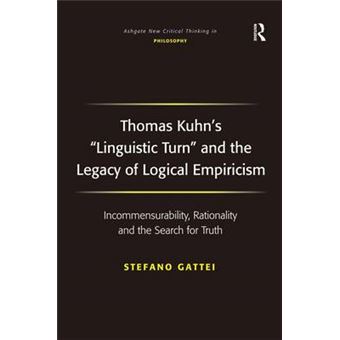
Thomas Kuhn'S 'Linguistic Turn' And The Legacy Of Logical Empiricism Incommensurability, Rationality And The Search For Truth Ashgate New Critical Thinking In Philosophy
Stefano Gattei
Resumo
Ver tudo
Thomas Kuhn'S 'Linguistic Turn' And The Legacy Of Logical Empiricism Incommensurability, Rationality And The Search For Truth Ashgate New Critical Thinking In Philosophy
Presenting a critical history of the philosophy of science in the twentieth century, focusing on the transition from logical positivism in its first half to the new philosophy of science in its second, Stefano Gattei examines the influence of several key figures, but the main focus of the book are Thomas Kuhn and Karl Popper. Kuhn as the central figure of...
Presenting a critical history of the philosophy of science in the twentieth century, focusing on the transition from logical positivism in its first half to the new philosophy of science in its second, Stefano Gattei examines the influence of several key figures, but the main focus of the book are Thomas Kuhn and Karl Popper. Kuhn as the central figure of...

Thomas Kuhn'S 'Linguistic Turn' And The Legacy Of Logical...
Resumo
Thomas Kuhn'S 'Linguistic Turn' And The Legacy Of Logical Empiricism Incommensurability, Rationality And The Search For Truth Ashgate New Critical Thinking In Philosophy
Presenting a critical history of the philosophy of science in the twentieth century, focusing on the transition from logical positivism in its first half to the new philosophy of science in its second, Stefano Gattei examines the influence of several key figures, but the main focus of the book are Thomas Kuhn and Karl Popper. Kuhn as the central figure of the new philosophy of science, and Popper as a key philosopher of the time who stands outside both traditions. Gattei makes two important claims about the development of the philosophy of science in the twentieth century, that Kuhn is much closer to positivism than many have supposed, failing to solve the crisis of neopostivism, and that Popper, in responding to the deeper crisis of foundationalism that spans the whole of the Western philosophical tradition, ultimately shows what is untenable in Kuhn's view. Gattei has written a very detailed and fine grained, yet accessible discussion making exceptionally interesting use of archive materials.
Nº de Páginas: 292
Encadernação: Capa Dura / Hardback
Tema: Philosophy of science
Presenting a critical history of the philosophy of science in the twentieth century, focusing on the transition from logical positivism in its first half to the new philosophy of science in its second, Stefano Gattei examines the influence of several key figures, but the main focus of the book are Thomas Kuhn and Karl Popper. Kuhn as the central figure of the new philosophy of science, and Popper as a key philosopher of the time who stands outside both traditions. Gattei makes two important claims about the development of the philosophy of science in the twentieth century, that Kuhn is much closer to positivism than many have supposed, failing to solve the crisis of neopostivism, and that Popper, in responding to the deeper crisis of foundationalism that spans the whole of the Western philosophical tradition, ultimately shows what is untenable in Kuhn's view. Gattei has written a very detailed and fine grained, yet accessible discussion making exceptionally interesting use of archive materials.
Nº de Páginas: 292
Encadernação: Capa Dura / Hardback
Tema: Philosophy of science
Publicidade
Avaliações dos nossos clientes
Thomas Kuhn'S 'Linguistic Turn' And The Legacy Of Logical Empiricism Incommensurability, Rationality And The Search For Truth Ashgate New Critical Thinking In Philosophy
Sê o primeiro a dar
a tua opinião sobre este produto
Características
- Editora
-
Taylor & Francis
- Idiomas
-
Inglês
- Número de páginas
-
292,0
- Peso
-
680,0
- Data de lançamento
-
28/11/2008
- Série/Edição Limitada
-
1
- EAN
-
9780754661603
Publicidade
Publicidade