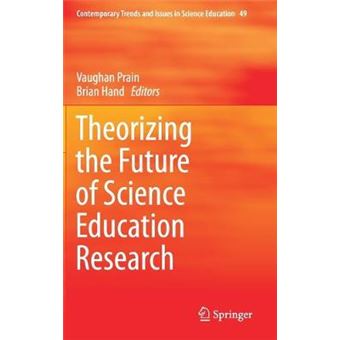
Theorizing The Future Of Science Education Research 49 Contemporary Trends And Issues In Science Education
Vaughan Prain
Resumo
Ver tudo
Theorizing The Future Of Science Education Research 49 Contemporary Trends And Issues In Science Education
1.Introduction: Theorizing future research for the science classroom, Vaughan Prain and Brian Hand.- SECTION ONE: Mapping the Big Picture.- 2. Merging cognitive and sociocultural approaches: Towards better understandings of the processes of developing thinking and reasoning, Paul Webb and Bill Whitlow.- 3. Frameworks, Committed Testers, and Science as a Form of Life, Jim Gee.- 4. Writers in Community Model: 15...
1.Introduction: Theorizing future research for the science classroom, Vaughan Prain and Brian Hand.- SECTION ONE: Mapping the Big Picture.- 2. Merging cognitive and sociocultural approaches: Towards better understandings of the processes of developing thinking and reasoning, Paul Webb and Bill Whitlow.- 3. Frameworks, Committed Testers, and Science as a Form of Life, Jim Gee.- 4. Writers in Community Model: 15...

Theorizing The Future Of Science Education Research 49...
Resumo
Theorizing The Future Of Science Education Research 49 Contemporary Trends And Issues In Science Education
1.Introduction: Theorizing future research for the science classroom, Vaughan Prain and Brian Hand.- SECTION ONE: Mapping the Big Picture.- 2. Merging cognitive and sociocultural approaches: Towards better understandings of the processes of developing thinking and reasoning, Paul Webb and Bill Whitlow.- 3. Frameworks, Committed Testers, and Science as a Form of Life, Jim Gee.- 4. Writers in Community Model: 15 Recommendations for Future Research in Using Writing to Promote Science Learning, Steve Graham.- SECTION TWO: Theorizing Aspects of Science Learning.- 5. An Exploratory Neuroimaging Study of Argumentative and Summary Writing Using Functional Near Infrared Spectroscopy, Richard Lamb, Brian Hand and Sae Yeol Yoon.- 6. Scientific Practices as an Actor-Network of Literacy Events: Forging a Convergence between Disciplinary Literacy and Scientific Practices, Kok-Sing Tang.- 7. Immersive approaches to science argumentation and literacy: What does it mean to live the languages of science?, Brian Hand, Andy Cavagnetto, and Lori Norton-Meier.- 8. Writing as an Epistemological Tool: Perspectives from personal, disciplinary, and sociocultural landscapes, Ying-Chih Chen.- 9. Scientific Literacy Practices from a concept of Discourse Space: Focusing on Resources and Demands for Learning, Sae Yeol Yoon.- 10. Future research in learning with, through and from scientific representations, Vaughan Prain.- 11. I'm not a writer: Shaping the literacy-related attitudes and beliefs of students and teachers in STEM disciplines, Lisa Emerson.- SECTION THREE: Review.- 12. Critical dialogues for emerging research agendas in science education, Greg Kelly.-
Nº de Páginas:
Encadernação: Capa Dura / Hardback
Tema: Teaching of a specific subject
1.Introduction: Theorizing future research for the science classroom, Vaughan Prain and Brian Hand.- SECTION ONE: Mapping the Big Picture.- 2. Merging cognitive and sociocultural approaches: Towards better understandings of the processes of developing thinking and reasoning, Paul Webb and Bill Whitlow.- 3. Frameworks, Committed Testers, and Science as a Form of Life, Jim Gee.- 4. Writers in Community Model: 15 Recommendations for Future Research in Using Writing to Promote Science Learning, Steve Graham.- SECTION TWO: Theorizing Aspects of Science Learning.- 5. An Exploratory Neuroimaging Study of Argumentative and Summary Writing Using Functional Near Infrared Spectroscopy, Richard Lamb, Brian Hand and Sae Yeol Yoon.- 6. Scientific Practices as an Actor-Network of Literacy Events: Forging a Convergence between Disciplinary Literacy and Scientific Practices, Kok-Sing Tang.- 7. Immersive approaches to science argumentation and literacy: What does it mean to live the languages of science?, Brian Hand, Andy Cavagnetto, and Lori Norton-Meier.- 8. Writing as an Epistemological Tool: Perspectives from personal, disciplinary, and sociocultural landscapes, Ying-Chih Chen.- 9. Scientific Literacy Practices from a concept of Discourse Space: Focusing on Resources and Demands for Learning, Sae Yeol Yoon.- 10. Future research in learning with, through and from scientific representations, Vaughan Prain.- 11. I'm not a writer: Shaping the literacy-related attitudes and beliefs of students and teachers in STEM disciplines, Lisa Emerson.- SECTION THREE: Review.- 12. Critical dialogues for emerging research agendas in science education, Greg Kelly.-
Nº de Páginas:
Encadernação: Capa Dura / Hardback
Tema: Teaching of a specific subject
Publicidade
Avaliações dos nossos clientes
Theorizing The Future Of Science Education Research 49 Contemporary Trends And Issues In Science Education
Sê o primeiro a dar
a tua opinião sobre este produto
Características
- Editora
-
Springer
- Idiomas
-
Inglês
- Peso
-
460,0
- Data de lançamento
-
05/11/2019
- Série/Edição Limitada
-
1st ed. 2019
- EAN
-
9783030240127
Publicidade
Publicidade