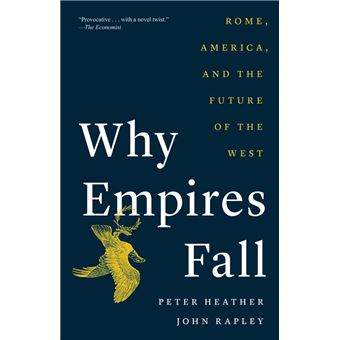
Why Empires Fall: Rome, America, and the Future of the West
Peter Heather, John Rapley
Estado :
Novo
Vendido por
País de expedição : Alemanha
Resumo
Ver tudo
A new perspective on parallels between ancient Rome and the modern world, and what comes next
“[A] provocative short book . . . with a novel twist.”—The Economist
Over the last three centuries, the West rose to dominate the planet. Then, around the start of the new millennium, history took a dramatic turn. Faced with economic stagnation and internal political division, the West has found itself in rapid decline compared to the global periphery it had previously colonized. This is not the first time we have seen such a...
“[A] provocative short book . . . with a novel twist.”—The Economist
Over the last three centuries, the West rose to dominate the planet. Then, around the start of the new millennium, history took a dramatic turn. Faced with economic stagnation and internal political division, the West has found itself in rapid decline compared to the global periphery it had previously colonized. This is not the first time we have seen such a...

Why Empires Fall: Rome, America, and the Future of the West
Resumo
A new perspective on parallels between ancient Rome and the modern world, and what comes next
“[A] provocative short book . . . with a novel twist.”—The Economist
Over the last three centuries, the West rose to dominate the planet. Then, around the start of the new millennium, history took a dramatic turn. Faced with economic stagnation and internal political division, the West has found itself in rapid decline compared to the global periphery it had previously colonized. This is not the first time we have seen such a rise and fall: the Roman Empire followed a similar arc, from dizzying power to disintegration.
Historian Peter Heather and political economist John Rapley explore the uncanny parallels, and productive differences, between ancient Rome and the modern West, moving beyond the tropes of invading barbarians and civilizational decay to unearth new lessons. From 399 to 1999, they argue, through the unfolding of parallel, underlying imperial life cycles, both empires sowed the seeds of their own destruction. Has the era of Western global domination indeed reached its end? Heather and Rapley contemplate what comes next.
“[A] provocative short book . . . with a novel twist.”—The Economist
Over the last three centuries, the West rose to dominate the planet. Then, around the start of the new millennium, history took a dramatic turn. Faced with economic stagnation and internal political division, the West has found itself in rapid decline compared to the global periphery it had previously colonized. This is not the first time we have seen such a rise and fall: the Roman Empire followed a similar arc, from dizzying power to disintegration.
Historian Peter Heather and political economist John Rapley explore the uncanny parallels, and productive differences, between ancient Rome and the modern West, moving beyond the tropes of invading barbarians and civilizational decay to unearth new lessons. From 399 to 1999, they argue, through the unfolding of parallel, underlying imperial life cycles, both empires sowed the seeds of their own destruction. Has the era of Western global domination indeed reached its end? Heather and Rapley contemplate what comes next.
Publicidade
Avaliações dos nossos clientes
Why Empires Fall: Rome, America, and the Future of the West
Sê o primeiro a dar
a tua opinião sobre este produto
Características
- Editora
-
Yale University Press
- Idiomas
-
Inglês
- Número de páginas
-
200
- Encadernação
-
Capa Mole / Paperback
- Data de lançamento
-
10/09/2024
- Comprimento
-
14.2
- Altura
-
21.6
- Peso
-
227.0
- EAN
-
9780300280081
Publicidade
Publicidade