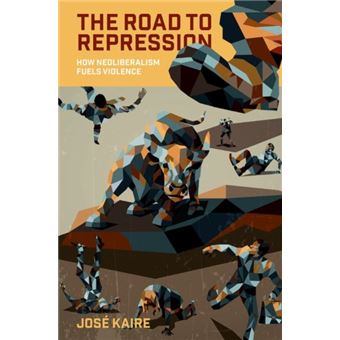
The Road to Repression How Neoliberalism Fuels Violence
José Kaire, Assistant Professor School of Politics and Global Studies José Kaire
Estado :
Novo
Vendido por
País de expedição : Portugal Continental
Comentários do vendedor
Best Offer | Melhor Preço
Resumo
Ver tudo
At the end of the Cold War, analysts, advocates, and policymakers believed that violent dictatorships were on a path toward extinction. The theory was that economic liberalization would constrain abusive regimes by reducing their economic power. But despite decades of economic globalization, some dictatorships remain as repressive as ever. Why has economic liberalization shielded some dictatorships from repression while making others more violent?
The Road to Repression answers this question by examining the influence...
The Road to Repression answers this question by examining the influence...
Outras ofertas

The Road to Repression How Neoliberalism Fuels Violence
Resumo
At the end of the Cold War, analysts, advocates, and policymakers believed that violent dictatorships were on a path toward extinction. The theory was that economic liberalization would constrain abusive regimes by reducing their economic power. But despite decades of economic globalization, some dictatorships remain as repressive as ever. Why has economic liberalization shielded some dictatorships from repression while making others more violent?
The Road to Repression answers this question by examining the influence of political elites in autocratic systems around the world-from Latin America to Southeast Asia to West Africa. José Kaire explains the disparate outcomes in states with liberalizing markets by highlighting the impact of the relationship between dictators and their ruling class. As winners of the status quo, elites are skeptical of change; they see the regime as the guarantor of their power and economic reform as a threat to it. If the ruling coalition is strong, dictators must find a way to appease them or risk a coup. Leaders respond by repressing regime outsiders to show insiders that the status quo is safe despite the economic reforms. In contrast, leaders who have a weak elite can reform the economy without concessions and liberalization can succeed in empowering and protecting the public. Understanding the role that autocratic elites play is therefore crucial to determining whether autocracies will turn to violence after economic liberalization, and instructing on how to better promote human rights in the countries most likely to violate them.
The Road to Repression answers this question by examining the influence of political elites in autocratic systems around the world-from Latin America to Southeast Asia to West Africa. José Kaire explains the disparate outcomes in states with liberalizing markets by highlighting the impact of the relationship between dictators and their ruling class. As winners of the status quo, elites are skeptical of change; they see the regime as the guarantor of their power and economic reform as a threat to it. If the ruling coalition is strong, dictators must find a way to appease them or risk a coup. Leaders respond by repressing regime outsiders to show insiders that the status quo is safe despite the economic reforms. In contrast, leaders who have a weak elite can reform the economy without concessions and liberalization can succeed in empowering and protecting the public. Understanding the role that autocratic elites play is therefore crucial to determining whether autocracies will turn to violence after economic liberalization, and instructing on how to better promote human rights in the countries most likely to violate them.
Publicidade
Avaliações dos nossos clientes
The Road to Repression How Neoliberalism Fuels Violence
Sê o primeiro a dar
a tua opinião sobre este produto
Características
- Editora
-
Oxford University Press, Incorporated
- Idiomas
-
Inglês
- Número de páginas
-
248
- Encadernação
-
Capa Mole / Paperback
- Data de lançamento
-
22/09/2025
- EAN
-
9780197820179
Publicidade
Publicidade