Desperate Magic : The Moral Economy of Witchcraft in Seventeenth-Century Russia
Valerie A. Kivelson
Resumo
Ver tudo
In the courtrooms of seventeenth-century Russia, the great majority of those accused of witchcraft were male, in sharp contrast to the profile of accused witches across Catholic and Protestant Europe in the same period. While European courts targeted and executed overwhelmingly female suspects, often on charges of compacting with the devil, the tsars' courts vigorously pursued men and some women accused of practicing more down-to-earth magic, using poetic spells and home-grown potions. Instead of Satanism or heresy, the...

Desperate Magic : The Moral Economy of Witchcraft in...
Resumo
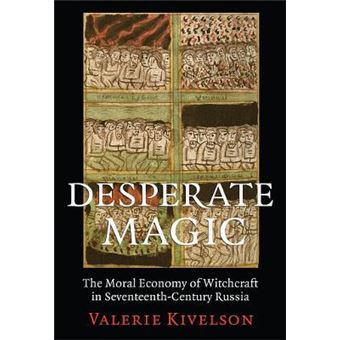
In the courtrooms of seventeenth-century Russia, the great majority of those accused of witchcraft were male, in sharp contrast to the profile of accused witches across Catholic and Protestant Europe in the same period. While European courts targeted and executed overwhelmingly female suspects, often on charges of compacting with the devil, the tsars' courts vigorously pursued men and some women accused of practicing more down-to-earth magic, using poetic spells and home-grown potions. Instead of Satanism or heresy, the primary concern in witchcraft testimony in Russia involved efforts to use magic to subvert, mitigate, or avenge the harsh conditions of patriarchy, serfdom, and social hierarchy.Broadly comparative and richly illustrated with color plates, Desperate Magic places the trials of witches in the context of early modern Russian law, religion, and society. Piecing together evidence from trial records to illuminate some of the central puzzles of Muscovite history, Kivelson explores the interplay among the testimony of accusers, the leading questions of the interrogators, and the confessions of the accused. Assembled, they create a picture of a shared moral vision of the world that crossed social divides. Because of the routine use of torture in extracting and shaping confessions, Kivelson addresses methodological and ideological questions about the Muscovite courts' equation of pain and truth, questions with continuing resonance in the world today. Within a moral economy that paired unquestioned hierarchical inequities with expectations of reciprocity, magic and suspicions of magic emerged where those expectations were most egregiously violated.Witchcraft in Russia surfaces as one of the ways that oppression was contested by ordinary people scrambling to survive in a fiercely inequitable world. Masters and slaves, husbands and wives, and officers and soldiers alike believed there should be limits to exploitation and saw magic deployed at the junctures where hierarchical order veered into violent excess.
Publicidade
Avaliações dos nossos clientes
Desperate Magic : The Moral Economy of Witchcraft in Seventeenth-Century Russia
Sê o primeiro a dar
a tua opinião sobre este produto
Características
- Editora
-
Cornell University Press
- Idiomas
-
Inglês
- Número de páginas
-
376
- Dimensão
-
235 x 156 x 28
- Comprimento
-
15,5 cm
- Largura
-
2,9 cm
- Altura
-
23,5 cm
- Peso
-
28 g
- Data de lançamento
-
15/11/2013
- Colecção
-
Witchcraft
- Tema
-
Bruxaria e wicca
- Origem
-
United States
- EAN
-
9780801451461
Publicidade
Publicidade